

Published by AgamiSoft | Reading time: ~14 minutes
|
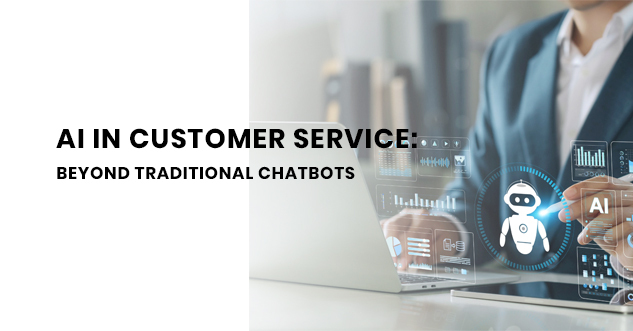
Featured Snippet / AEO Answer : AI customer service combines conversational AI, knowledge retrieval, workflow automation, and real-time agent assistance to resolve customer issues faster while improving support quality and reducing operational costs extending well beyond chatbot FAQ deflection to autonomous case resolution, multilingual support, intelligent routing, and agent co-piloting that surfaces relevant information during live interactions. Modern AI customer service platforms extend beyond chatbots by supporting autonomous case resolution, multilingual assistance, intelligent routing, and agent assistance enabling contact centers to handle higher volumes with fewer agents while improving customer satisfaction.
|
|
Quick Answer / TL;DR : The chatbot era of AI customer service conversational interfaces that deflected FAQ volume but escalated everything else is over. AI customer service in 2026 means autonomous case resolution where AI systems own the full resolution path for defined issue types, real-time agent assistance that surfaces knowledge and suggested responses during live interactions, intelligent routing that assigns cases to the right resource based on issue complexity and customer value, and sentiment monitoring that detects escalation risk before customers say the words. The organizations achieving the strongest CX and cost outcomes are not those with the most sophisticated chatbots they are those that redesigned their support operations around AI capabilities that didn't exist three years ago.
|
Why "We Have a Chatbot" Is No Longer a Customer Service AI Strategy in 2026
The first wave of enterprise chatbot deployment, roughly 2018–2022, followed a consistent pattern: deploy a chatbot to handle the top 20 FAQ topics, measure success by deflection rate, and call it a digital transformation win. The deflection rate metrics looked good. The customer satisfaction metrics frequently did not.
The problem was architectural, not cosmetic. Traditional chatbots were intent classifiers they recognized a question type, matched it to a pre-written response, and either answered it or transferred to a human when they couldn't. They had no access to the customer's account, no ability to take action in backend systems, no memory of previous interactions, and no capacity to handle anything outside their predefined intent library. Every novel question, every complaint, every issue requiring account access everything that actually mattered to the customer ended up with a human agent anyway.
Three developments have fundamentally changed what AI customer service can do in 2026:
LLMs have made natural language understanding universal rather than intent-specific. Modern conversational AI built on GPT-4, Claude, Gemini, or fine-tuned equivalents understands free-text customer language without requiring explicit intent mapping. A customer writing "I've been charged twice and I'm incredibly frustrated" doesn't need to match a "billing dispute" intent tag the AI understands the issue, the emotional state, and the appropriate response path simultaneously.
Tool use has enabled AI to take action, not just respond. As covered in our AI employees framework, AI agents with tool access can query account databases, initiate refunds, update records, and trigger workflows turning a conversational interface into a complete case resolution system for defined issue types. The difference between a chatbot that says "I'll connect you to billing" and an AI agent that resolves the billing issue directly is the tool access architecture.
Agent assistance AI has made human agents dramatically more capable. For cases that require human judgment, AI agent assist systems surface the right knowledge article, suggest the appropriate response, flag compliance risks in the agent's draft reply, and update CRM records automatically reducing handle time and improving first contact resolution without removing the human from high-stakes interactions.
What Is AI Customer Service, Exactly and What Are Its Five Distinct Capability Levels?
AI customer service encompasses the application of artificial intelligence to the functions of customer support resolving customer issues, answering questions, routing cases to appropriate resources, and assisting human agents operating at different levels of autonomy and capability depending on the issue type and organizational risk tolerance.
The most useful framework for AI customer service capability is a five-level model that maps what AI handles versus what humans handle at each level:
Level 1 AI-assisted search and knowledge delivery
AI that retrieves and surfaces relevant knowledge base articles in response to customer questions the simplest form, where AI improves self-service access but the customer still reads and applies the answer themselves. Still valuable for reducing agent-answered volume on knowledge-access queries, but not autonomous resolution.
Level 2 Conversational AI (chatbot generation 2)
AI that engages in multi-turn conversation, maintains context within the interaction, handles variation in customer language, and resolves defined FAQ-type questions with personalized responses that reference the customer's specific account data. The improvement over Level 1 is interaction quality; the limitation is still that "resolution" for anything complex means handoff to a human.
Level 3 Autonomous case resolution (AI agent)
AI that owns the complete resolution path for defined issue categories account balance inquiries where the resolution is an account lookup and a clear answer, password resets, order status updates, simple returns processing, subscription upgrades using tool access to query systems and take actions without human involvement. This is the level that produces the most significant operational cost reduction and the highest customer satisfaction for in-scope issue types.
Level 4 AI-assisted human resolution (agent co-pilot)
For cases requiring human judgment complex complaints, high-value customer retention conversations, escalated disputes, sensitive situations AI runs alongside the human agent, surfacing relevant customer history, suggesting response language, flagging compliance risks, and automating post-call CRM updates. The human makes the decision; AI eliminates the friction around it.
Level 5 Proactive AI intervention
AI that identifies service risk before the customer contacts support detecting churn risk from usage patterns, notifying customers of issues before they call in, triggering proactive retention outreach for high-value customers showing disengagement signals. This level shifts the support model from reactive to preventive.
Modern AI customer service platforms extend beyond chatbots by spanning multiple levels simultaneously deploying Level 3 autonomous resolution for in-scope cases, Level 4 agent assistance for out-of-scope cases requiring human handling, and Level 5 proactive intervention for the highest-value customer segment.
The Performance Data That Defines What's Actually Achievable With AI Customer Service
AI Customer Service Performance Benchmarks
|
Capability Level |
Metric |
AI Performance |
vs Human-Only Baseline |
|
Level 3 Autonomous resolution |
First contact resolution rate (in-scope cases) |
65–80% |
Comparable to top-tier agents |
|
Level 3 Autonomous resolution |
Handle time for in-scope cases |
2–4 minutes |
vs 8–12 minutes human |
|
Level 3 Autonomous resolution |
Cost per resolved contact |
$0.50–$2.00 |
vs $6–$18 human agent |
|
Level 4 Agent assist |
Agent handle time reduction |
20–35% |
For assisted contacts |
|
Level 4 Agent assist |
First contact resolution improvement |
10–15% |
Higher knowledge access |
|
Level 5 Proactive intervention |
Churn prevention rate (flagged at-risk customers) |
15–25% |
vs no intervention baseline |
Sources: Salesforce State of Service Report 2025; Zendesk AI Customer Service Benchmark 2025; McKinsey Customer Care AI Report 2025; Gartner Contact Center AI Survey 2025.
Scale of AI Customer Service Impact
-
Modern AI customer service platforms enable autonomous case resolution for 35–55% of total contact volume when deployed across a well-defined issue scope not the 80–90% deflection rates that chatbot vendors claim for FAQ traffic alone, but genuine resolution for issues customers were previously waiting for human agents to handle (Salesforce, 2025)
-
Agent assist AI reduces average handle time by 20–35% for assisted contacts, enabling the same number of agents to handle 25–45% more volume or the same volume with 20–30% fewer agents (Gartner, 2025)
-
AI customer service CSAT for autonomous resolution of in-scope cases matches or exceeds human agent CSAT when the AI achieves first contact resolution the determinant of customer satisfaction is whether the issue was resolved, not whether a human was involved (Zendesk, 2025)
-
AI agent assist reduces after-call work by 60–70% through automated CRM updates, case notes, and follow-up task creation a significant component of total contact center cost that traditional efficiency metrics undercount (McKinsey, 2025)
How to Build an AI Customer Service Program That Goes Beyond Chatbots: A 5-Step Framework
Step 1: Classify Your Contact Volume by Issue Type, Resolution Complexity, and Autonomous Resolution Eligibility
The foundation of an AI customer service program that delivers real operational impact is an accurate understanding of what your contact volume actually consists of:
-
Pull 6–12 months of contact data and classify each contact reason not at the "billing" or "technical support" category level, but at the specific issue level: "check account balance," "dispute a charge," "upgrade subscription plan," "report a service outage," "cancel account," "request a refund under $X"
-
For each specific issue type, assess autonomous resolution eligibility against three criteria: Can the resolution be fully determined from system data the AI can access? Is the action the AI would take reversible or low-risk if incorrect? Does the regulatory or policy environment permit automated resolution without human sign-off?
-
Rank eligible issue types by volume the highest-volume, autonomous-resolution-eligible issues are your first automation targets, because they produce the most significant cost and capacity impact per deployed automation
-
Identify the remaining issue types that require human resolution and classify them by complexity moderate complexity issues (agent can resolve with the right knowledge surfaced quickly) are your agent assist targets; high-complexity issues (require judgment, empathy, or senior authority) remain human-handled with minimal AI augmentation
Step 2: Build the Tool Access Architecture That Enables True Autonomous Resolution
The distinction between a chatbot that says "I'll check that for you" and an AI agent that actually checks it and resolves it is the tool access architecture:
-
Identify the system access requirements for each autonomous resolution issue type: a subscription upgrade resolution requires read access to the customer's current plan, write access to the subscription management system, and billing system access to initiate proration calculation three distinct system connections for one resolution type
-
Apply least-privilege access design: each AI agent role should access only the specific systems and actions required for its defined issue types following the same principle from our AI employees framework that governs how any role's system access is scoped
-
Build approval gates for irreversible or high-value actions: refunds above defined thresholds, account closures, and plan downgrades should require a confirmation step before execution either a customer confirmation ("I'm going to process a $47.50 refund to your card ending in 4521. Please confirm to proceed.") or a human approval routing for high-value cases
-
Test tool failure handling explicitly: what does the AI do when the system it needs to query is unavailable? When a write action fails? Graceful degradation informing the customer clearly and routing to a human with context must be designed, not assumed
Step 3: Deploy Agent Assist Before Expanding Autonomous Resolution Scope
Agent assist deployment is the highest-ROI, lowest-risk starting point for AI customer service programs it improves every human-handled contact immediately while building the knowledge infrastructure that autonomous resolution will later depend on:
-
Deploy real-time knowledge surfacing: AI that reads the incoming customer message and surfaces the most relevant knowledge base article to the agent before the agent has finished reading the message reducing knowledge search time from 60–90 seconds per contact to near-zero for the 70% of contacts where the right knowledge article is the primary resolution path
-
Deploy response suggestion: AI-generated response drafts for the agent to review, edit, and send reducing the cognitive effort of response composition while maintaining human judgment on the final message
-
Deploy compliance flagging: AI that reviews the agent's draft response for policy violations, missing required disclosures, or tone issues before the agent sends reducing compliance incidents without requiring additional QA staffing
-
Deploy automated after-contact work: AI that generates case notes, updates CRM contact records, creates follow-up tasks, and closes the ticket with appropriate categorization automatically after the agent marks the contact resolved eliminating 5–10 minutes of after-call administrative work per contact
Step 4: Implement Intelligent Routing That Uses AI to Match Case to Resource
Routing the decision of which agent, queue, or automation handles each incoming contact is the highest-leverage single decision in contact center operations and the function where traditional rule-based routing most consistently underperforms:
-
Replace rules-based routing with ML routing: train a routing model on historical contact data (issue type, customer value tier, previous contact history, agent specialization) and measured outcome data (FCR, CSAT, handle time) to predict the optimal routing destination for each new contact routing should optimize for first contact resolution, not just queue balance
-
Implement customer value-aware routing: high-value customers (defined by LTV, risk of churn, or account tier) should route to experienced agents or dedicated retention specialists, not to the first available agent in a general queue AI routing that incorporates customer value signals explicitly produces measurably better retention outcomes for at-risk high-value customers
-
Implement sentiment-aware escalation: real-time sentiment monitoring that detects rising customer frustration during an AI-handled or agent-handled interaction, and escalates to a more experienced agent or a supervisor before the customer explicitly requests escalation reducing the damage that frustrated customers cause to CSAT and social reputation before the situation deteriorates further
Step 5: Build Proactive AI Intervention for Your Highest-Value Customer Segment
Proactive AI customer service reaching customers before they reach you with a problem is the highest-ROI AI customer service investment for organizations with high customer acquisition cost and high churn cost:
-
Define your proactive intervention triggers: which customer behaviors or system events predict a support need or churn risk declining usage, failed payment without resolution, service disruption in the customer's region, onboarding milestone not completed within expected timeframe
-
Build personalized outreach from AI-detected signals: when a customer's usage drops 40% below their historical average, an AI-generated outreach message that references their specific usage pattern and offers relevant support is dramatically more likely to produce re-engagement than a generic "we miss you" campaign
-
Measure proactive intervention impact against a control group: run a structured test comparing customers who receive AI-triggered proactive outreach against a matched control group who don't, measuring churn rate and next-contact rate the data from this test determines whether to expand or modify the proactive program
Which AI Customer Service Platforms Deliver Best Results in 2026?
For autonomous case resolution (Level 3):
Salesforce Agentforce provides the most enterprise-ready autonomous customer service agent platform deploying AI agents with Salesforce CRM access, tool use capability, and defined scope boundaries, with native integration into the Salesforce Service Cloud contact center environment. Intercom Fin provides purpose-built AI autonomous resolution for digital-native customer support strong for product-led growth companies with primarily chat-based customer support. Zendesk AI provides autonomous resolution integrated into the Zendesk support platform.
For agent assist (Level 4):
Salesforce Einstein Copilot for Service, Zendesk Copilot, and Freshdesk Freddy AI all provide real-time knowledge surfacing, response suggestion, and automated after-contact work within their respective contact center platforms. Cresta provides standalone AI agent assist capability deployable across multiple contact center platforms particularly strong for real-time coaching and compliance flagging.
For intelligent routing:
Five9 Intelligent Cloud Contact Center and NICE CXone provide AI-powered routing with customer value awareness and sentiment signals for enterprise contact center deployments. Genesys Cloud CX provides comparable AI routing capability with strong multichannel support.
For proactive AI intervention:
Gainsight (primarily for B2B SaaS) provides customer success AI that detects health scores and triggers proactive outreach. Qualtrics Customer Experience provides sentiment monitoring and churn risk prediction that feeds proactive intervention workflows.
For conversational AI foundation:
Anthropic Claude (claude-sonnet-4-6) and OpenAI GPT-4 accessed through AI gateway architecture (covered in our AI gateway guide) provide the LLM foundation for custom AI customer service implementations that require capability beyond packaged platform defaults.
Explore our AI Agent Development and Customer Experience Solutions capabilities for CX leaders and contact center managers building AI customer service programs that go beyond chatbots to autonomous resolution and proactive intervention.
What Goes Wrong With AI Customer Service Deployments and How to Prevent Each Failure
Failure 1: Measuring AI Customer Service Success by Deflection Rate Rather Than Resolution Rate
Deflection rate the percentage of contacts that don't reach a human agent is the metric that chatbot vendors optimize and that most organizations use to evaluate AI customer service performance. It's the wrong metric. A contact that is "deflected" by an AI that didn't resolve the issue is a customer who either calls back (generating a second, more frustrated contact) or stops being a customer. Resolution rate the percentage of contacts where the customer's issue was actually resolved is the metric that predicts customer satisfaction and retention. Build your AI customer service measurement around resolution rate from deployment day one.
Failure 2: Expanding Autonomous Resolution Scope Before Validating Current Scope Accuracy
Organizations that expand the issue types covered by autonomous AI resolution pressured by cost reduction targets before validating that the current scope is resolving correctly consistently produce a surge in escalations, re-contacts, and CSAT decline that is correctly attributed to AI errors but incorrectly attributed to AI in general rather than to premature scope expansion. Validate resolution accuracy on every current issue type quarterly before expanding scope. The expansion case should be built on resolution accuracy data, not on issue type volume alone.
Failure 3: Deploying AI in Customer Service Without Staff Communication and Training
AI customer service deployments that are announced to contact center agents as a cost-reduction initiative "the AI will handle X% of contacts, which means we'll need fewer agents" consistently produce agent resistance that manifests as poor escalation handoffs, reduced engagement with AI assist suggestions, and active undermining of AI interactions they could smooth. Frame AI deployment as agent capability enhancement agents handle more complex, higher-value interactions; AI handles repetitive volume and invest in training that genuinely improves how agents work with AI assist tools, rather than treating AI deployment as a headcount reduction exercise that agents should accept passively.
Failure 4: Treating Multichannel as Independently Deployed AI Instances
Organizations that deploy separate AI customer service tools on each channel different chatbot for web chat, different AI for mobile app, different tool for social media, different system for email produce a fragmented customer experience where the AI on each channel has no knowledge of what happened on any other channel, creating the "I just explained this to your chatbot" frustration that erodes AI's customer satisfaction advantage. Build a unified customer interaction context that the AI agent on every channel can read the customer's issue history, previous contact content, resolution status, and sentiment signals before designing channel-specific AI interfaces.
Frequently Asked Questions
How Is AI Transforming Customer Service?
AI is transforming customer service across five capability levels: knowledge delivery that surfaces the right information to customers instantly; conversational AI that handles multi-turn customer interactions without intent matching constraints; autonomous case resolution that owns the complete resolution path for defined issue types without human involvement; agent assistance that runs alongside human agents to surface knowledge, suggest responses, and automate post-contact work; and proactive intervention that identifies service risk before customers contact support. The transformation is not that AI is replacing human agents it is that AI handles the high-volume, well-defined, system-resolvable issues while human agents focus on complex, high-stakes, relationship-intensive interactions where human judgment produces better outcomes than AI.
What's the Difference Between AI Agents and Chatbots?
Chatbots are intent classifiers they recognize a customer's message, match it to a predefined response category, and either answer from a static response library or transfer to a human when the message doesn't match a recognized intent. They have no memory, no system access, and no ability to take action. AI agents are autonomous systems with tool access, conversational context, and the ability to execute multi-step resolution workflows they can query account databases, process transactions, update records, and resolve issues end-to-end without human involvement for in-scope cases. The practical difference: a chatbot tells a customer their refund policy; an AI agent processes the refund. Modern AI customer service platforms extend beyond chatbots by supporting the tool access and autonomous action capability that defines AI agents.
Which Customer Support Tasks Can AI Fully Automate?
AI can fully automate customer support tasks that meet three criteria: the resolution can be determined from system data the AI can access, the action required is reversible or low-risk if executed incorrectly, and policy permits automated resolution without human sign-off. In practice, this includes: account balance and status inquiries, password and authentication resets, order status and shipping updates, subscription plan changes within defined parameters, refunds under defined thresholds, appointment scheduling and rescheduling, FAQ-type product and policy questions, and payment method updates. Tasks that cannot be fully automated include high-value dispute resolution, situations requiring empathy for emotional distress, decisions requiring judgment about exceptions to policy, and cases with legal or regulatory implications requiring human sign-off.
Classify Contact Volume Before Selecting Technology. Measure Resolution Rate, Not Deflection Rate. Deploy Agent Assist Before Expanding Autonomous Scope.
AI customer service delivers its cost reduction and CSAT improvement 35–55% autonomous resolution rates, 20–35% handle time reduction, 15–25% churn prevention for proactively intervened at-risk customers when the program is built from a contact volume classification that identifies which specific issue types are eligible for autonomous resolution, what tool access each requires, and what the handoff architecture looks like for issues that aren't eligible.
The CX leaders and contact center managers achieving the strongest AI customer service outcomes in 2026 share one measurement discipline: they switched from deflection rate to resolution rate as their primary AI performance metric before deployment, not after discovering that high deflection rates and declining CSAT could coexist in the same contact center.
Classify your top 20 contact reasons by autonomous resolution eligibility this month using the three-criteria framework in this guide. Deploy agent assist on every human-handled contact before expanding autonomous resolution scope the handle time reduction and FCR improvement fund the broader program. Switch your primary AI performance KPI from deflection rate to first contact resolution rate before your next quarterly business review.
To build an AI customer service program that delivers autonomous case resolution, intelligent routing, and proactive intervention across your customer base, explore our AI Agent Development and Customer Experience Solutions capabilities structured for CX leaders and contact center managers who need AI deployed as a genuine resolution capability, not a deflection metric that hides unresolved customer frustration.