


Published by AgamiSoft | Reading time: ~14 minutes
|
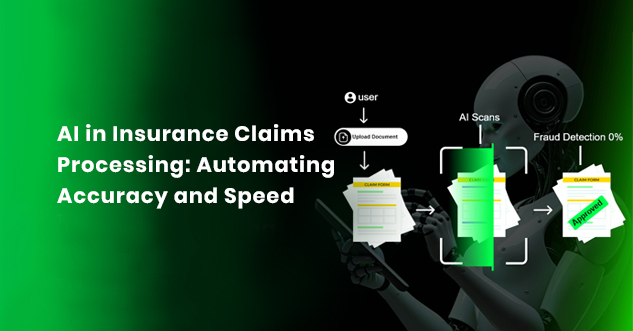
Featured Snippet / AEO Answer : AI insurance automation compresses claims cycle times from 15–22 days to as few as hours for eligible claim categories by automating the four slowest stages: document extraction and verification, damage assessment from photos, fraud scoring before settlement authorization, and settlement calculation for routine claim types. The accuracy question is answered by design AI handles well-defined, high-volume claim types where training data is abundant, while routing ambiguous, complex, and high-value claims to human adjusters with AI-prepared analysis.
|
|
Quick Answer / TL;DR : The average property and casualty claim in the US takes 15–22 days to settle. The same claim, processed through a well-deployed AI insurance automation system, settles in hours for the majority of routine claim types not because AI is cutting corners, but because the four workflow stages that consume most of that 15–22 day cycle (document intake, damage assessment, fraud review, settlement calculation) each have AI equivalents that execute in minutes rather than days. The accuracy is not lower it is higher, because AI extracts documents more consistently than manual keying and assesses damage from more data points than a single adjuster inspection.
|
Why Claims Cycle Time Has Become an Existential Competitive Issue for Insurers in 2026
Settlement speed used to be a differentiator. Now it is table stakes and traditional insurers who cannot match digital-native competitors' cycle times are losing renewal share among the customers who experienced better.
Lemonade settled a claim in 3 seconds in a widely cited 2016 demonstration. That was a marketing moment. The 2026 reality is that digital-first carriers are settling straightforward claims in under 24 hours routinely, and policyholders who have experienced that timeline do not willingly return to waiting three weeks for a windshield replacement reimbursement. J.D. Power's 2025 Insurance Claims Satisfaction Study identifies claim settlement speed as the single highest-weight driver of overall claims satisfaction higher than settlement amount, higher than adjuster courtesy, higher than communication frequency.
This creates a specific competitive pressure: traditional carriers running manual claims workflows are not just slower than InsurTech competitors. They are slower on the claims experience dimension that policyholders weight most heavily in their renewal decision.
Three developments have removed the last excuses for not deploying AI claims automation in 2026:
AI document processing accuracy has crossed the threshold required for production insurance deployment. Intelligent document processing platforms trained on insurance-specific document types now achieve 94–98% extraction accuracy on structured documents above the 90–92% accuracy of manual data entry while processing at 50–100x the speed. The accuracy argument against AI document processing has inverted: manual processing is now the less accurate option for high-volume, routine document types.
AI damage assessment tools have demonstrated accuracy on billions of claims. Tractable's AI auto damage assessment has processed data from more than 100 million claims a training dataset that gives its computer vision models statistical confidence on damage patterns that no individual adjuster could accumulate in a career. The accuracy is not theoretical; it is validated against settled claim values at scale.
Insurance regulators have published enough AI guidance that compliance is navigable. The NAIC's Model Bulletin on Use of Artificial Intelligence Systems provides the framework for what documentation, validation, and monitoring insurers must demonstrate. Carriers who were waiting for regulatory clarity before deploying AI claims automation now have that clarity and the waiting is no longer defensible.
What AI Insurance Automation Actually Does to the Claims Timeline Stage by Stage
AI insurance automation applied to claims processing doesn't shorten one step in a 22-day cycle by a few hours. It eliminates the waiting time between steps the queue time, the handoff time, the "waiting for the adjuster to have capacity to open this file" time that constitutes the majority of elapsed claim cycle time for routine claims.
A traditional 15-day cycle for a straightforward auto collision claim might break down as:
-
Day 1: Policyholder calls to report; FNOL data manually entered
-
Days 2–4: Claim assigned, adjuster queue wait
-
Day 5: Adjuster opens file, reviews documents, requests additional photos
-
Days 6–8: Policyholder provides additional photos; documents reviewed
-
Day 9–10: Damage estimate obtained, coverage verified
-
Days 11–13: Settlement calculated, internal approval obtained
-
Days 14–15: Settlement communicated, payment initiated
Every numbered item in that sequence involves human action at a specific point in the queue. AI claims automation replaces the human action with automated execution and eliminates the queue entirely for the routine claim types where no human action adds value.
The same claim under AI insurance automation:
-
Minute 1: Digital FNOL submitted; AI extracts structured data, assigns claim number, routes to appropriate coverage line
-
Minutes 2–8: AI requests additional photos via automated SMS; policyholder submits via mobile portal
-
Minutes 9–20: AI damage assessment runs on submitted photos; fraud score generated simultaneously
-
Minutes 21–30: Coverage verification against policy data; settlement calculated
-
Minute 31: Settlement offer communicated; policyholder accepts; payment initiated
The accuracy difference between the 15-day version and the 31-minute version is not that the AI version is less thorough. It is that the AI version doesn't have a queue.
The Accuracy and Speed Numbers That Make the Business Case
Claims Processing Time Comparison by Stage
|
Process Stage |
Manual Cycle Time |
AI-Automated Time |
Reduction |
|
FNOL intake and routing |
20–45 minutes |
2–4 minutes |
85–90% |
|
Document extraction and verification |
30–90 minutes per claim |
3–8 minutes |
88–95% |
|
Damage assessment (auto, moderate severity) |
2–5 hours adjuster time |
8–15 minutes AI |
90–95% |
|
Fraud screening |
45–120 minutes (rule-based alerts) |
Real-time (simultaneous with intake) |
Elimination of separate step |
|
Settlement calculation |
30–60 minutes |
2–5 minutes |
90–95% |
|
Total elapsed cycle (routine eligible claim) |
12–22 days |
30 minutes–4 hours |
95%+ |
Sources: Accenture Insurance Claims Technology Study 2025; McKinsey Insurance AI Productivity Report 2025; Tractable AI Damage Assessment Benchmark 2025.
Accuracy Data That Counters the "AI Makes Mistakes" Objection
-
AI document extraction accuracy on insurance-specific documents: 94–98%, compared to 88–93% for manual data entry AI is more accurate for high-volume routine documents (LexisNexis Insurance AI Benchmark, 2025)
-
Tractable AI damage assessment agreement with adjuster estimates: within 3–5% for in-scope auto damage categories across a validated benchmark of 50+ million claims (Tractable, 2025)
-
AI fraud detection false positive rate: 5–8% versus 15–25% for rule-based systems fewer legitimate claims incorrectly flagged, more actual fraud identified (Shift Technology, 2025)
-
Straight-through processing rate for AI-eligible claim categories: 40–65% at mature deployments, compared to 5–15% before AI automation meaning 40–65% of eligible claims settle without any adjuster involvement (Accenture, 2025)
The Customer Satisfaction ROI
-
Policyholders whose claims settle in under 24 hours give NPS scores 35–45 points higher than policyholders whose claims take 2+ weeks the largest single-factor NPS impact in J.D. Power's 2025 Insurance Claims Satisfaction Study
-
78% of policyholders who experienced a fast, digital claims settlement renew their policy at the same or higher coverage level, compared to 61% of policyholders who experienced a traditional manual claims process (McKinsey, 2025)
How to Build an AI Claims Automation Pipeline: A 5-Step Framework
Step 1: Identify Your Highest-Volume, Lowest-Complexity Claim Category as Your First Deployment
The first deployment should maximize learning while minimizing risk:
-
Pull your claims data for the past 24 months and rank claim types by volume the highest-volume, most standardized claim types (auto glass, minor collision under $3,000, standard contents claims) are your first automation candidates
-
Calculate current cycle time, adjuster hours per claim, and re-open rate for your top three volume categories these numbers become your pre-automation baseline that post-deployment ROI will be measured against
-
Assess data availability for the candidate category: do you have 18+ months of historical claims with outcomes (settled amounts, fraud findings, re-opens) that form the training and validation dataset for the AI models you'll deploy?
-
Start with one category, deploy fully, measure results, then expand sequential deployment with measured outcomes consistently outperforms attempting to automate multiple claim types simultaneously
Step 2: Build the Document Processing Foundation First
Every AI claims automation capability depends on the ability to reliably extract structured data from unstructured claim documents. Build this before any decision automation:
-
Audit your claim document mix for the target category identify every document type submitted (photos, police reports, repair estimates, medical invoices, policy declarations) and their format variation range
-
Select an IDP platform with pre-built insurance document models and configure it for your specific document mix don't attempt to train document models from scratch on a proprietary dataset when insurance-specific pre-trained models exist
-
Set extraction confidence thresholds with explicit routing rules: above threshold → proceed to automated decision; below threshold → route to adjuster with extracted data pre-populated for human verification
-
Run a parallel processing validation for 4–6 weeks AI processes documents and extracts data simultaneously with manual processing, comparing AI extraction to manual extraction to validate accuracy before AI extraction drives any automated decisions
Step 3: Deploy Fraud Scoring as a Simultaneous, Not Sequential, Step
One of the most impactful AI claims automation design decisions is making fraud scoring simultaneous with intake, not a sequential step that adds time after intake completes:
-
Configure your fraud scoring model to trigger at the moment FNOL data is available not after document processing completes, not after damage assessment so that fraud scores are available before any settlement authorization
-
Define three routing tiers based on fraud score: low score (proceed to automated settlement path), medium score (proceed with enhanced adjuster review before settlement), high score (route to SIU with claim hold)
-
Include behavioral signals in fraud scoring that traditional rule-based systems miss: time between loss event and claim submission, photo metadata consistency with reported loss location and time, claimant's claims frequency history, and provider/repair shop network analysis
-
Track your fraud score tiers against confirmed fraud outcomes at 90-day review calibrating the score thresholds against your actual book to reduce false positives without reducing true detection rate
Step 4: Implement AI Damage Assessment With Defined Photo Requirements
AI damage assessment quality is directly dependent on photo submission quality and photo quality is controllable through the submission workflow:
-
Build a guided photo submission flow in your digital FNOL portal that instructs policyholders on the specific angles and distances required for AI assessment eligibility, and validates photo completeness before accepting submission
-
Deploy AI assessment only on claims that meet the photo completeness threshold claims with insufficient photos route to traditional adjustment rather than attempting AI assessment on incomplete visual data
-
Present AI assessment results to policyholders with a clear explanation of how the estimate was generated and a genuine, accessible path to adjuster review if they dispute the AI estimate
-
Build your adjuster review process so that when an AI assessment is disputed, the adjuster has access to the AI's reasoning which photo regions drove which cost estimates not just the final number
Step 5: Close the Loop Connect Settled Outcomes to Model Retraining
AI claims models that don't learn from their errors become progressively less accurate as claims patterns evolve:
-
Build a structured data pipeline connecting settled claim outcomes back to the model training infrastructure actual settled values against AI estimates, confirmed fraud findings against fraud scores, re-opened claims against initial automation decisions
-
Set a quarterly model performance review cadence that uses this outcome data to assess whether model accuracy has drifted and trigger retraining when it has
-
Track accuracy separately by claim value range, claim type, and geographic region aggregate accuracy metrics can conceal performance gaps in specific subsets that matter for regulatory compliance and customer fairness
Which Tools Deliver the Fastest Path to AI Claims Automation in 2026?
For the fastest time-to-production document processing:
Hyperscience provides purpose-built insurance document AI with pre-trained models for the most common insurance document types the fastest path from zero to production-grade extraction for carriers that want validated insurance-specific models rather than general-purpose document AI configured for insurance use. Typical time from contract to production extraction: 8–14 weeks for a well-scoped first claim category.
For AI damage assessment:
Tractable for auto claims the market leader with the largest validated training dataset and the widest carrier deployment base, providing the fastest path to production accuracy for auto collision and total loss assessment. Hover for property damage using computer vision and LiDAR measurements to generate roof and exterior damage assessments without requiring an inspector on-site.
For fraud detection:
Shift Technology for carriers wanting a purpose-built insurance fraud AI with network analysis capability out of the box. For carriers with strong data science teams wanting more customization, XGBoost or LightGBM models trained on proprietary claims history consistently outperform generic fraud models on book-specific fraud patterns.
For end-to-end claims automation orchestration:
Guidewire ClaimCenter with AI integration marketplace for carriers already on Guidewire enabling AI service connections without rebuilding the claims management layer. For carriers not on Guidewire, custom orchestration built on LangGraph connecting IDP, fraud scoring, damage assessment, and claims system APIs provides the flexibility for highly specific workflow requirements.
Explore our AI Automation Services and Document AI Solutions capabilities for insurance executives and claims managers ready to compress cycle times from weeks to hours across their eligible claims portfolio.
What Goes Wrong When Insurers Attempt AI Claims Automation and How to Prevent It
Failure 1: Automating Before Establishing the Baseline
Carriers that deploy AI claims automation without measuring pre-deployment cycle time, adjuster hours per claim, and fraud rate by claim category have no way to measure what the AI is actually delivering and no way to calculate the ROI that justifies continued investment or expansion. Establish the baseline before a single automated claim is processed.
Failure 2: Setting Automation Eligibility Too Broadly Too Early
The pressure to show large-scale AI impact leads some carriers to set automation eligibility criteria broadly covering claim types and value ranges where the AI model hasn't been validated and then discovering accuracy problems on edge cases that more conservative eligibility criteria would have routed to human adjustment. Expand eligibility incrementally, only after accuracy validation on each category, rather than setting broad eligibility at launch to maximize the initial automation rate.
Failure 3: Not Building a Genuine Human Review Path
AI claims systems that technically offer adjuster review but make it difficult to access buried in the digital interface, requiring specific actions most policyholders won't know to take, or connecting to a queue with a 5-day wait time do not satisfy the regulatory or customer satisfaction requirements for human oversight. The human review path must be prominently offered, genuinely accessible, and staffed to respond faster than the AI-generated timeline the policyholder is being asked to accept.
Failure 4: Treating Photo Submission as a User Problem, Not a System Design Problem
AI damage assessment accuracy degrades significantly on low-quality, incomplete, or incorrectly framed photo submissions and carriers that deploy AI assessment without investing in the guided submission workflow that produces submission-ready photos consistently discover that AI accuracy on real-world submitted photos is significantly lower than vendor accuracy claims based on well-photographed training datasets. The photo submission UX is part of the AI deployment, not a separate customer experience decision.
Frequently Asked Questions
How Does AI Reduce Insurance Claims Cycle Time From Weeks to Hours?
AI reduces claims cycle time by eliminating the queue wait between process steps that constitutes most of the elapsed time in a traditional claims cycle. Document extraction runs in minutes rather than hours. Damage assessment from photos runs in minutes rather than days waiting for adjuster capacity. Fraud scoring runs simultaneously with intake rather than as a sequential step. Settlement calculation runs immediately after assessment rather than waiting for an adjuster to open the file. For eligible claim categories typically straightforward, moderate-value claims with complete digital submission the 15–22 day cycle compresses to 30 minutes to 4 hours, not because any individual step is slightly faster, but because the queue between steps disappears entirely.
Can AI Detect Insurance Fraud?
AI detects insurance fraud more accurately than rule-based systems for the novel and complex schemes that rules don't cover. AI fraud detection analyzes behavioral patterns, network relationships between parties to a claim, photo metadata consistency, and claimant history across dimensions that no rule set explicitly captures. AI-enhanced fraud detection achieves false positive rates of 5–8% compared to 15–25% for rule-based systems meaning significantly fewer legitimate claims are incorrectly flagged, while actual fraud detection rates improve. The critical limitation is that fraud AI must be continuously retrained on confirmed fraud outcomes as fraud patterns evolve, or accuracy degrades as fraud actors adapt to the patterns the model currently detects.
What Are the Benefits of AI for Insurance Companies?
AI delivers four categories of measurable benefit for insurance companies. Speed: straight-through processing rates increasing from 5–15% to 40–65% of eligible claims, with cycle times compressing from 15–22 days to hours for automated categories. Cost: 25–35% lower claims handling cost per claim for automated categories, driven by adjuster capacity freed from routine processing to focus on complex, high-value claims. Accuracy: AI document extraction at 94–98% versus 88–93% for manual keying; AI damage assessment within 3–5% of adjuster estimates; fraud detection false positives 60–70% lower than rule-based systems. Customer satisfaction: NPS scores 35–45 points higher for fast digital claims settlement versus traditional manual process directly improving renewal rates and reducing customer acquisition cost from churn.
Baseline Before You Automate. Start With One Category. Build the Human Review Path Before the Automation Goes Live.
AI insurance automation delivers its cycle time and accuracy improvements when it's deployed in the correct sequence: baseline measurement before deployment, single-category focus with full validation before expansion, and the human review path built and tested before the first automated claim is processed not added afterward when regulators or policyholders surface the gap.
The insurance executives and claims managers achieving 95%+ cycle time reduction on eligible claim categories in 2026 made one sequencing decision consistently: they built the document processing foundation and validated its accuracy on a parallel processing basis before turning on any automated decision capability. That validation period produced the accuracy confidence that allowed them to expand automation eligibility aggressively once the first category proved out.
Pull your claims volume data this week and identify your highest-volume, most standardized claim category that's your first deployment target. Measure its current cycle time, adjuster hours per claim, and fraud rate as your pre-automation baseline. Commission a document mix audit for that category to scope the IDP configuration before platform evaluation begins.
To build an AI claims automation program that compresses cycle times from weeks to hours for your eligible claim categories with the accuracy and compliance architecture production insurance deployment requires, explore our AI Automation Services and Document AI Solutions capabilities structured for insurance executives and claims managers who need AI deployed as a measured, auditable capability, not a speed-over-accuracy gamble.